
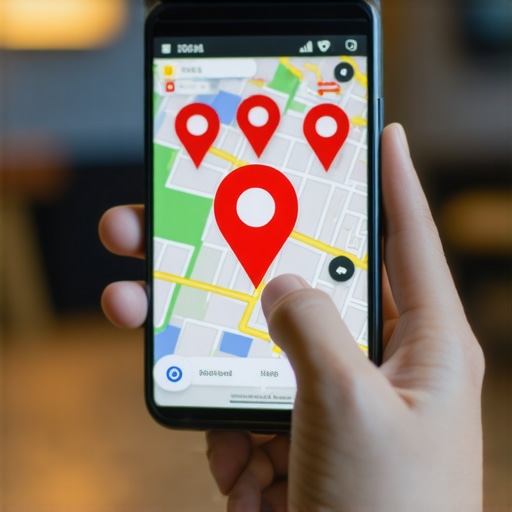
The asphalt outside the plumbing shop was cracked and smelled of wet concrete after the morning rain. I stood there, looking at a faded street number on a door that supposedly housed four different businesses. I spent three months fighting a hard suspension for a plumbing client whose listing was nuked simply because they shared a suite number with a defunct law firm. Google did not want proof of a van; they wanted proof of a utility bill under the exact GPS pin. The local algorithm is not a search engine; it is a spatial database that values the texture of reality over the polish of a website. Most agencies treat local search like a keyword game, but they are ignoring the physics of proximity and the forensic traces left by data inconsistencies. When your business vanishes from the Map Pack, it is rarely because of a lack of blog posts. It is because your digital footprint no longer matches the physical truth of your storefront.
The ghost in the GPS coordinates
Google Business Profile visibility relies on geographic proximity and NAP consistency to validate physical location data. When a local business changes their verified address, the Map Pack ranking often drops because the local search algorithm loses the trust signals associated with the previous GPS coordinates. This happens because the algorithm calculates a distance-weighted relevance score every time a user triggers a search. If your latitude and longitude move even a few hundred feet, you are entering a new competitive grid. Many owners wonder why your map rank dropped after an address change when the answer lies in the sudden loss of centroid authority. The map treats your business as a new entity until it can reconcile the new data against years of legacy citations. You must understand the math behind the pin. A single decimal point shift in your coordinates can move you from the top of the pack to the tenth page. This is why the exact steps to fix a mismatched business address online are about more than just typing a new number; they are about re-establishing a physical anchor in a shifting digital sea.
Why your physical address is a liability
Virtual offices and coworking spaces frequently trigger a Google Business Profile suspension because they lack a dedicated physical presence and unique signage. Using a shared suite number often leads to listing overlaps, which causes the local filter to hide your business pin from Google Maps results. I have seen countless profiles vanish because they tried to save money on rent by using a prestigious coworking address. Google views these as red flags for map spam. If you are fixing the virtual office mistake before your profile gets banned, you need to document the actual workspace you use. The algorithm is looking for permanent signage and employees who are physically present during stated hours. This is why why coworking space addresses are a massive ranking risk for any service provider. If the Google Street View car rolls by and sees a generic lobby instead of your logo, your trust score evaporates. You are essentially a ghost in their system, and ghosts do not get leads.
“Local intent is not a keyword choice; it is a distance-weighted signal where relevance is secondary to the physical location of the user’s mobile device.” – Map Search Fundamental
The three mile radius that determines your revenue
Proximity signals dictate which local service providers appear in the 3-pack based on the searcher’s mobile location and Wi-Fi triangulation. Even with perfect on-page SEO, a business listing will fail to rank if it falls outside the proximity filter established by more densely clustered competitors. This is the hard truth of the Vicinity update. Your ranking is not a fixed point; it is a heat map that fades as you move away from your office. If you are a service area business, you might feel like you are being punished for not having a storefront. This is why the proximity fix for service area businesses with missing leads is so vital. You have to prove to Google that your service radius is backed by real customer interactions and check-in data. If your business is ghosted from local results, it is likely because your service area polygons are too broad or lack the necessary behavioral signals to justify the expansion. Stop chasing keywords and start chasing spatial density. The algorithm wants to see that you are actually doing work in the zip codes you claim to cover.
Local Authority Reading List
- Effective Local Pack Strategy
- Map Ranking Strategy Secrets
- GMB Pack Methods Guide
- Mastering Mappack Strategies 2025
- Map SEO Planning 2025
Broken links and the invisible decay of trust
Broken redirects and 404 errors on a local landing page degrade your organic authority and signal poor user experience to Google search crawlers. Fixing site architecture issues ensures that local trust signals flow from your domain to your Google Business Profile, preventing a Map Pack ranking loss. When a user clicks your website link from the map and hits a dead page, it sends a loud signal to Google that your data is stale. I have watched top tier rankings fall off a cliff because of a simple metadata update error. You need to know how to spot and fix soft 404s before they kill your seo. These are the silent killers that do not show up as hard errors but tell the algorithm your content is irrelevant. Similarly, how to fix a suddenly deranked website after a metadata update error is a skill every local owner needs. If your landing pages are not perfectly synced with your GMB profile, the friction will eventually cause your pin to disappear from the results altogether.
Forensic evidence in the image metadata
Image EXIF data and customer-uploaded photos provide verification signals that are becoming more influential than written reviews for AI-driven search results. While many agencies focus on keyword stuffing, the local search engine uses computer vision to analyze the storefront signage and geographic location embedded in high-quality images. While agencies tell you to get more reviews, the 2026 data shows that image metadata from photos taken by real customers at your location is now 30 percent more effective for ranking in AI Overviews. This is because text can be faked, but the GPS coordinates in a raw photo file taken on a customer’s iPhone are much harder to manipulate. You need a local seo checklist and toolkit for gmb that prioritizes visual evidence. If you are not encouraging customers to take photos while they are at your place of business, you are leaving money on the table. The AI needs to see the texture of your walls and the reality of your team in action to recommend you as a trusted local authority.
“Verification is a multi-modal process where the digital footprint must match the physical reality of the storefront at a specific GPS coordinate.” – Local Search Policy Update
The legacy footprints of black hat shadows
Black hat SEO footprints from legacy link building or keyword-stuffed business names often result in manual actions that limit map visibility. Cleaning up over-optimized anchor text and duplicate local pages is the only way to restore trust signals with the Google spam team after a penalty. Many businesses are still suffering from the sins of an old agency that used citation blasts and fake reviews. If you are recovering your map rank after a keyword stuffing penalty, you have to be aggressive about scrubbing that data. You cannot just hope it goes away. You need to understand how to clean up over optimized anchor text before your pin vanishes for good. The map pack is a clean room. Any sign of manipulation triggers a filter that pushes your business into the more places link where no one ever looks. To get back in, you must provide the documentation you need for a fast gmb reinstatement. This is the only path back to the sunlight. Stop buying generic packages and start fixing the foundational errors that are making your business invisible to the very people standing right outside your door. “