
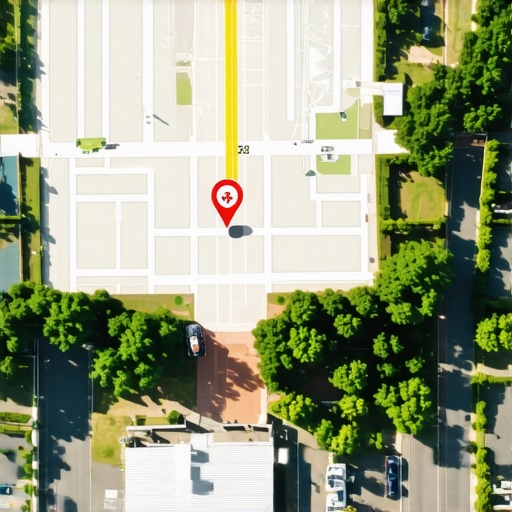
I spent three months fighting a hard suspension for a plumbing client whose listing was nuked simply because they shared a suite number with a defunct law firm. Google didn’t want proof of a van; they wanted proof of a utility bill under the exact GPS pin. I stood on that sidewalk, smelling the wet concrete of a nearby construction site, and realized that Google is no longer a directory. It is a forensic auditor of physical reality. If your business exists in a service area but your data exists in a glitchy digital vacuum, you are invisible. This is the new reality of the map pack ecosystem where proximity is the ultimate gatekeeper. I saw the glitch in the storefront data firsthand. A legitimate plumber was being treated as a ghost because a computer saw a shared suite number as a sign of address rental fraud. This is the war we are fighting in local search today.
The phantom presence of service area profiles
Service area businesses face invisibility when their verification address lacks physical trust signals or their service area polygons conflict with local centroid logic. Google prioritizes LocalBusiness entities that prove a physical footprint through NAP consistency and verified GPS coordinates. If your profile is ghosted, it often stems from a lack of proximity signals that the algorithm requires to rank you against brick and mortar competitors. The algorithm sees your service area but looks for a anchor point. When that anchor point is a residential home or a hidden office, the proximity weight drops significantly. You might be physically present in the city, but in the eyes of the spatial database, you are a floating entity without a home base. This is often the hidden reason your business pin disappeared from local search results in the first place.
Why moving your service area kills visibility
Ranking loss after moving happens because the proximity radius is calculated from your verified physical address, not the service area you select in the dashboard. When you change locations, the map pack re-evaluates your centroid relevance and often requires fresh geo-specific trust signals to re-establish your position. If you have recently moved, you likely need local seo services to fix ranking loss after moving city or service area because the old proximity data is now a liability. The distance between your new address and the previous customer density causes a massive drop in 1-mile to 3-mile visibility. Google views the move as a brand new business entity in many cases, requiring you to rebuild your local authority from the ground up. This shift in the physics of the local algorithm is why your phone stops ringing the moment you change your zip code.
“Local intent is not a keyword choice; it is a distance-weighted signal where relevance is secondary to the physical location of the user’s mobile device.” – Map Search Fundamental
The forensic trace of a virtual office mistake
Google Business Profile suspensions frequently target businesses using virtual offices or coworking spaces because these locations fail the physical occupancy test. The algorithm uses street view data and registry scans to detect high-density business addresses that lack signage. If you are struggling with a ban, seeking local seo services to fix gmb issues caused by virtual office or coworking space is the only way to navigate the appeal process. I have seen countless profiles get nuked because they thought a fancy downtown mailing address would help them rank. Instead, it acted as a red flag for the spam team. They want to see a dedicated entrance, permanent signage, and employees on-site. If you cannot provide a video walk-through that shows these elements, your listing will remain a ghost. This is why fixing the virtual office mistake before your profile gets banned is a better strategy than trying to hide it later.
Local Authority Reading List
- The documentation you need for a fast GMB reinstatement
- Why your map ranking software is failing to catch local drops
- The data cleanup move that forces Google to trust your NAP
- How to structure your local site to avoid content cannibalization
- The specific fix for schema errors that are hiding your business from local searchers
Mismatched data and the trust tax
Inconsistent business names, addresses, and phone numbers create a trust deficit that pushes your profile into the more places link instead of the top three. Data aggregators often hold onto old information, creating a conflict between your GBP profile and the rest of the web. Professional services to fix mismatched business address and phone number issues are necessary to purge this bad data from the ecosystem. When Google sees three different addresses for your plumbing business, it defaults to the safest option: not showing you at all. This is the trust tax you pay for neglecting your citation audit. You must find and fix the NAP errors that are killing your rank by looking at the deep layers of the web, not just the major directories. Often, how to find and fix the NAP errors killing your local rank involves manually checking sites you haven’t visited in years.
The physics of a three mile radius
Proximity is a mathematical weight where the user’s distance from your verified pin determines 80 percent of your local search visibility. As a user moves away from your business centroid, your relevance score drops exponentially, regardless of how many reviews you have. You need to understand how to use real world proximity data to outrank national competitors who are optimized for keywords but not for local distance signals. The algorithm calculates the travel time and the density of businesses between the searcher and your pin. If there are five other plumbers between the user and your office, you are unlikely to show up in the top three. This is why image metadata and local justifications in reviews are so important; they provide the extra weight needed to push your pin three blocks further. You can even use the image tactic that actually forces more clicks to your local business pin to gain an edge over older competitors.
“Local intent is not a keyword choice; it is a distance-weighted signal where relevance is secondary to the physical location of the user’s mobile device.” – Map Search Fundamental
Review patterns that trigger the spam filter
Fake review attacks or suspicious spikes in 5-star ratings can lead to a ghosted profile or a complete map ban because of automated reputation filters. Google looks for velocity anomalies and IP location mismatches when reviews are posted to your profile. If you have been targeted, you need seo services to fix fake reviews issues before the algorithm flags your entire account as untrustworthy. I have seen cafes get buried because a competitor used a VPN to drop twenty reviews at midnight. The algorithm doesn’t always know who is at fault; it just knows the data is dirty. Using a gmb review and reputation management toolkit helps you monitor these patterns in real-time. If you notice a drop, it might be because of a mass review removal that happened behind the scenes. You must be proactive in protecting your profile by spotting and reporting fake reviews before they compromise your authority.
Cleaning up the ghost locations of the past
Leaving old or closed locations active in the local ecosystem creates keyword cannibalization and confuses the Google search bot regarding your current primary service area. Each old listing competes for the same brand authority, often resulting in all locations being suppressed. Professional local seo services to clean up old or closed locations ensure that only your active, verified pins are drawing search equity. If you have moved three times in five years, the web is littered with digital debris. This debris tells Google your business is unstable. You need a checklist for auditing your local citation consistency to track down every ghost listing and shut it down properly. This is not just about deleting a profile; it is about reclaiming the NAP trust that was spread thin across multiple addresses. Only then will your primary location have the strength to rank in the local pack.
The toolkit for reclaiming your map pin
Recovering a ghosted business profile requires specialized tools to find GMB categories, monitor proximity changes, and audit local backlinks for spam. Using generic SEO tools will not give you the spatial data required to fix a map issue. You need a gmb review and reputation management toolkit and specific tools to find gmb categories and keywords that are actually moving the needle in your zip code. Most automated software fails to move the needle on proximity because it doesn’t account for the hyper-local layer of the algorithm. I recommend a proximity tool that verifies real world map rankings across a grid, not just from a single point. This allows you to see exactly where your visibility ends. Once you identify the dead zones, you can apply the content move that actually pushes your service area business into the local pack to expand your reach. Whether you are dealing with a banned gmb listing or just a slow decline, the right data is the only way to win. You might even need google business profile recovery services if the suspension is a hard one. The goal is to make your business a beacon in the spatial database once again.