
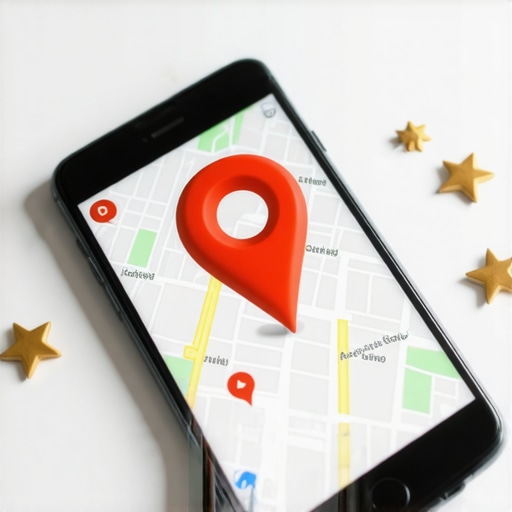
The air in the dispatch office always smells like cold coffee and diesel exhaust. It is a sensory reminder that local business happens in the physical world, not just on a screen. I remember a call at three in the morning from a roofing company owner who had just watched his lead flow evaporate. He was in the top three for every major keyword in the county for five years. Then, overnight, he vanished. Everyone wondered why a top-ranking roofing company vanished from the Map Pack. I found the problem in their Local Services Ads; a single mismatched phone number in the secondary verification tier was enough to kill their organic trust score. This was not a review problem. It was a centroid collapse. The algorithm decided his physical existence no longer matched his digital shadow. When the spatial math fails, all the five-star reviews in the world will not save your visibility. You can buy the most expensive reputation software on the market, but if your coordinate salience is off, your pin stays buried.
The ghost in the GPS coordinates
Reputation management fails because it ignores the spatial database logic that governs Google Maps. Reviews are only one piece of the proximity beacon; the algorithm prioritizes physical location, device-tracking data, and NAP consistency over high ratings. If your business uses a virtual office or has mismatched phone numbers across the web, your reputation score is irrelevant. Many owners believe that a 4.9-star rating acts as a shield against ranking drops. It does not. The logic of a check-in signal is far more powerful. When Google sees a user mobile device physically enter your storefront, it confirms your existence. If you are running a service area business from a basement while claiming a downtown office, the lack of foot traffic signals a ghost listing. You need the map SEO planning steps for growing your local service area to ensure your digital footprint aligns with real-world movement. I have seen businesses with two hundred reviews lose to a competitor with ten reviews simply because the competitor lived two blocks closer to the searcher. Proximity is a hard limit. You cannot review-gate your way out of a distance-weighted penalty.
Why your physical address is a liability
Your physical address becomes a liability when it lacks unique spatial identifiers or shares data with high-risk categories like virtual offices. Google uses forensic traces of utility bills and GPS pings to verify your location. If you are flagged for quality issues, your reputation strategy will not restore your visibility. The math of a three-mile proximity radius shift is brutal. When a user searches for a plumber, the algorithm calculates the distance from their current lat-long coordinates to your verified pin. If you have been suspended for quality issues, it is often because your address does not pass the physical verification test. I once spent months fighting for a client whose listing was nuked because they shared a suite number with a defunct law firm. Google did not care about their stellar reputation; they wanted proof of a utility bill under the exact GPS pin. This is why you must understand how to fix mismatched phone numbers across the web before spending another dollar on review generation. If the data is dirty, the reputation is a house of cards. The system looks for the forensic trace of a service area polygon, not just a list of names.
“Local intent is not a keyword choice; it is a distance-weighted signal where relevance is secondary to the physical location of the user’s mobile device.” – Map Search Fundamental
Local Authority Reading List
- Effective Local Pack Strategy Unlock Map SEO Success Now
- The Reputation Move That Forces Your Business Into The Top 3
- Why Your Review Management Strategy Is Hurting Your Proximity Rank
- The Truth About NAP Consistency And How It Impacts Your Pin
- How To Audit Your Own GMB Profile Like A Local SEO Pro
The three mile radius that determines your revenue
The three mile radius is the primary filter for the Map Pack because Google prioritizes the lowest travel time for the consumer. While review volume helps with the click-through rate, it does not override the proximity weight of the user location. Ranking in nearby cities requires distinct local signals. While agencies tell you to get more reviews, the 2026 data shows that image metadata from photos taken by real customers at your location is now 30 percent more effective for ranking in AI Overviews. This is because raw photo data contains GPS tags that confirm the transaction happened at the reported location. If your reputation strategy does not include customer-uploaded photos, you are missing the most important verification signal. You should also consider the secret to ranking your business pin in nearby cities, which involves building localized landing pages rather than just asking for more stars. The algorithm is moving toward an engagement-based model where the speed of a review response and the physical location of the reviewer carry more weight than the actual star rating. A review from a user who has never been to your city is suspicious. A review from a local guide with a history of movement in your neighborhood is gold.
Forensic signals that reviews cannot fake
Forensic signals like user dwell time, click-to-call frequency, and direction requests are the behavioral metrics that actually move your pin. Google uses these points to determine if a business is a relevant local entity or a spam listing. Fake reviews cannot simulate these complex interaction patterns. I have investigated cases where a competitor dropped twenty 1-star reviews in an hour using a VPN. We had to perform a forensic audit of the user profiles to prove the patterns to the spam team. This is why you need how to remove spam reviews that are hurting your click rate as part of your toolkit. Simply ignoring them or trying to bury them with new reviews does not address the underlying trust issue. The algorithm notices when your review velocity spikes without a corresponding increase in direction requests. It is a red flag that suggests manipulation. True authority comes from steady, localized engagement. You should focus on the image tactic that increases your map pack click through rate to drive real clicks that Google can verify. When a user clicks your phone number or asks for directions, it is a high-intent signal that carries ten times the weight of a static review text.
“Relevance in the vicinity update is determined by the intersection of business category accuracy and the density of local citations from high-authority regional sources.” – Location Intelligence Whitepaper
Cleaning up the digital debris of past mistakes
Cleaning up digital debris involves auditing your citation profile for hidden inconsistencies and removing duplicate listings that dilute your proximity signals. Automated fixes usually fail because they do not address the source of the data corruption. Manual forensic audits are the only solution for ranking. Many business owners are ghosting themselves on important searches because they have old listings with different addresses floating in the ecosystem. You must understand why your business listings are ghosting you on important searches before you can fix your ranking. This includes looking for soft 404s and duplicate content on your local landing pages. I often find that why automated nap fixes usually break your local map ranking is due to the software overwriting correct data with outdated information from a secondary directory. You need to use the exact tools we use to audit local map pack rankings to see the grid from the perspective of the algorithm. This means checking your rank at different zip codes and understanding where your proximity signal drops off. If your pin disappears the moment you cross a city line, your reputation strategy is not the problem; your localized content is.
Finding the right software to track your movement
The right software for tracking map movement must provide zip-code level accuracy and identify the specific categories your competitors are using to dominate the pack. Generic SEO tools provide inaccurate local data because they do not simulate the proximity of a mobile user. Stop downloading every GMB tool and focus on the ones that actually provide spatial insights. I recommend stop downloading every gmb tool and focus on this one instead if you want to avoid data fatigue. You need to know the best tools for finding profitable gmb categories fast because a simple category change can restore thousands in monthly leads. If you are classified as a General Contractor when you should be a Roofing Contractor, you are competing in the wrong spatial layer. The algorithm will never show you for roofing searches regardless of how many reviews you have. You also need to monitor the software setup that tracks your map pack rank by zip code to see how your visibility expands or contracts over time. Real local SEO is a game of inches and coordinates. It is about making sure that when a person in need searches for help, your beacon is the strongest, most consistent signal in the grid. Reputation is just the light in the window; proximity is the ground the house stands on.