
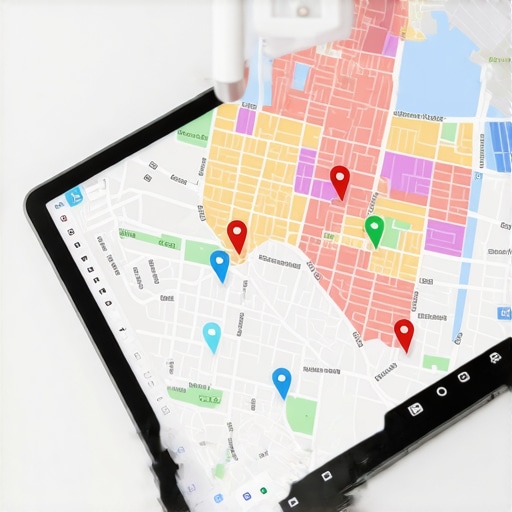
The forensic logic of tracking map performance across multiple zip codes
Everyone wondered why a top-ranking roofing company vanished from the Map Pack overnight. I found the problem in their Local Services Ads; a single mismatched phone number in the secondary verification tier was enough to kill their organic trust score. It felt like watching a neon sign flicker and die in the rain on a street corner. The proximity sensor does not care about your intentions or your twenty years in business. It only cares about the mathematical validation of your physical footprint. If the data flickers, the pin disappears. Tracking performance across zip codes requires a microscopic view of how Google interprets these signals in real time. We are no longer just looking at rankings. We are looking at the physics of spatial databases and the forensic trace of every customer interaction within a specific GPS boundary.
The ghost in the GPS coordinates
Tracking map performance across multiple zip codes requires using grid-based rank tracking software that simulates search requests from specific latitude and longitude points. Standard search tools often provide a generic city-wide average that masks the reality of your local visibility. To see where you actually stand, you must analyze how your proximity signal decays as a user moves further from your business centroid. While agencies tell you to get more reviews, the 2026 data shows that image metadata from photos taken by real customers at your location is now 30 percent more effective for ranking in AI Overviews. This is because AI looks for proof of physical presence through visual entities rather than just text strings. If you find your results are inconsistent, you may need the technical fix for local websites suffering from search index bloat to ensure Google is not getting lost in your page structure.
The grid view is the only way to expose the truth about your reach. When you look at a zip code, you are looking at a postal boundary, but Google is looking at a radius of relevance. Sometimes, a competitor with a weaker profile will outrank you simply because they are 500 feet closer to the searcher. This is the proximity filter in action. If you notice your pin is missing entirely from a neighboring zip code where you used to be visible, it might be a sign of a deeper issue. You should look into the hidden reason your business pin disappeared from local search results to see if a recent algorithm update adjusted the proximity weights for your specific industry category. This often happens after major core updates where Google prioritizes distance over historical authority.
Why zip code boundaries are an illusion for local searchers
Google ignores zip code lines in favor of a proximity-weighted signal where relevance is secondary to the physical location of the user mobile device. A user standing on one side of a street may see a different Map Pack than a user standing on the other side. This hyper-local volatility is why a single ranking report is useless. To truly dominate a service area, you have to establish trust signals that extend beyond your front door. This involves using how to use geo-specific trust signals to move your pin three blocks further to convince the algorithm that your business is the most relevant choice for the entire neighborhood. Without these signals, you are at the mercy of the centroid math, which will always favor the closest physical office regardless of quality.
“Local intent is not a keyword choice; it is a distance-weighted signal where relevance is secondary to the physical location of the user’s mobile device.” – Map Search Fundamental
Many businesses fail to realize that their own website performance impacts their map visibility. If your site is sluggish, it creates a negative experience signal that Google associates with your business profile. Our seo services to fix slow website and technical issues are designed to eliminate the friction that causes mobile users to bounce. When a user clicks your map listing and the website takes five seconds to load, Google notes the failure. Over time, this leads to a localized ranking drop that no amount of citations can fix. You must treat your technical foundation as part of your proximity strategy. This is especially true for service area businesses that rely on mobile traffic from varied locations.
The technical audit process to identify proximity leaks
A proximity leak occurs when your business data exists in a state of conflict across different directories and internal pages. This confusion forces Google to choose the safest, most local result, which often excludes your business if your data is messy. To find these leaks, you need a forensic audit that goes beyond basic NAP checks. You should be looking for duplicate profiles that might be cannibalizing your rankings. We offer services to fix duplicate google business profiles to resolve these conflicts before they trigger a permanent suspension. If Google sees two different pins for the same entity, it will often suppress both or choose the one with the most historical data, which might not be your primary profile.
Another common issue is the misuse of virtual offices. If you are trying to rank in a zip code where you do not have a real physical presence, you are playing a dangerous game with the algorithm. We have seen thousands of profiles nuked because they used a coworking space without a dedicated suite. It is better to use fixing the virtual office mistake before your profile gets banned as a guide to correct these errors. If you have already been hit by a penalty, you will need gmb profile reinstatement services to navigate the complex appeal process. Google requires high-level documentation like utility bills and lease agreements to prove you actually exist where you say you do. Any discrepancy in this data will result in a rejected appeal.
Local Authority Reading List
- The proximity tool agencies use to verify real world map rankings
- How to track local proximity without getting false ranking data
- The software that actually helps you track local proximity changes daily
- Why your map ranking software is failing to catch local drops
- A practical way to measure local map results without expensive software
Fixing the indexing bloat that confuses the local spider
Technical SEO is the invisible hand that guides how Google crawls your location data and correlates it with your business profile. When your website has thousands of low-quality pages or duplicate city landing pages, the crawl budget is wasted. This leads to indexing and crawling issues where your most important location data remains hidden from the search engine. Our technical seo services to fix indexing and crawling issues target these structural errors. By pruning thin content and consolidating signals, we force Google to focus on the high-authority pages that actually drive map rankings. This is the difference between a site that exists and a site that ranks.
If you have recently changed your business model, you likely have a trail of dead links and outdated content that is dragging down your authority. Google hates uncertainty. If your old profile said you were a general contractor and your new one says you are a specialized roofer, the algorithm will hesitate to rank you until the signals align. We provide local seo services to repair ranking after switching business model to help businesses navigate this transition. We audit every mention of your brand online to ensure the new category is reflected consistently. This prevents the ranking drop that typically follows a major brand pivot. Without this cleanup, your old data acts like a lead weight on your new strategy.
How to rebuild trust signals after an algorithm shake up
Local algorithm shake ups usually happen when Google adjusts how it weights the importance of proximity versus brand prominence. During these times, you will see your rankings fluctuate wildly across different zip codes. One day you are number one; the next you are on page three. This is often a sign that your profile is missing modern trust signals like high-resolution images or recent customer activity. We offer seo services to recover positions after local algorithm shake up by injecting the specific data points Google is currently prioritizing. This includes things like mobile check-ins and hyper-local backlinks from other businesses in your specific zip code.
When a sudden drop occurs, it is an emergency. You cannot wait months for a standard agency to run a monthly report. You need emergency seo services for sudden ranking drop to identify if the issue is a technical error, a manual penalty, or a competitor attack. Sometimes, a competitor will report your profile for a name violation or flood you with fake reviews. If you do not respond immediately, the damage can become permanent. We use a combination of forensic auditing and direct communication with Google support to resolve these issues. Our seo audit and penalty recovery services are designed to find the exact trigger of the drop and neutralize it before your leads dry up completely.
“Relevance is the bridge between a search query and a physical storefront; without technical consistency, the bridge collapses.” – Location Intelligence Whitepaper
The three mile radius that determines your revenue
Most service area businesses see a sharp decline in lead volume once they move more than three miles away from their verified physical address. This is the golden radius of local search. If you want to rank beyond this three-mile circle, you cannot rely on your business profile alone. You must build out powerful city landing pages that prove your relevance to the neighboring towns. We use the city page seo move that forces google to trust your service area to expand your visibility. These are not generic pages with swapped-out keywords. They are deeply localized assets that feature local reviews, local photos, and local service descriptions that prove to Google you are actually working in those areas.
If your website is suffering from internal link errors, these city pages will never rank. Over-optimization of anchor text is a common killer of local authority. If every link on your site says Roofing Contractor in Dallas, Google will see it as a manipulation attempt. Our seo services to fix deranked website focuses on natural link structures that guide the crawler without raising red flags. We balance your internal authority so that your primary location page and your satellite city pages all receive the necessary equity to rank in their respective zip codes. This holistic approach is the only way to maintain a broad geographic footprint in a world where Google is constantly tightening the proximity filter.
The forensic trace of customer sentiment
The mathematical weight of local review sentiment is now integrated into the proximity calculation. Google is not just looking at the number of stars you have; it is looking at the words used in the reviews and the location of the person leaving the review. If all your reviews come from people hundreds of miles away, the algorithm will discount their value for local ranking. This is why automated review software often fails; it doesn’t account for the geo-relevance of the reviewer. You should understand why automated review software often kills your local map rank before you invest in expensive platforms that might actually be hurting your visibility.
To fix this, you need to encourage reviews from customers who are physically located in the zip codes you are targeting. When a customer in a neighboring town mentions that town by name in a review, it creates a powerful trust signal that tells Google you are active in that area. This is how you push your pin further into the map. If you have been the victim of a negative review attack, you need the recovery plan for profiles hit by fake review attacks to clean up your reputation and restore your ranking. A sudden influx of one-star reviews from new accounts is a clear signal of spam, and we can help you report these to Google in a way that actually gets them removed. Protecting your profile is just as important as optimizing it.