
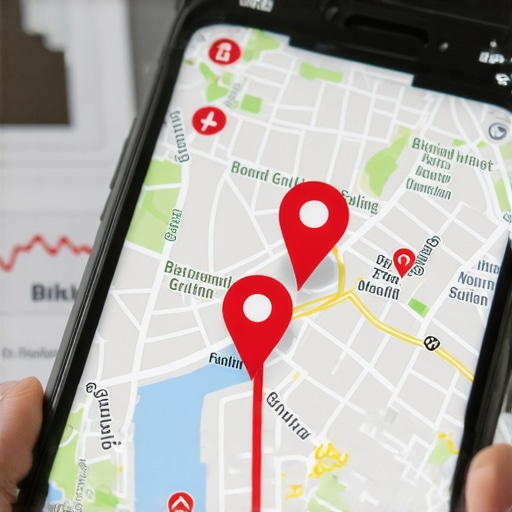
The Real Impact of Duplicate Listings on Your Maps Impressions
The smell of wet concrete after a morning rain always reminds me of the cold reality of local data; it is heavy, messy, and hard to change once it sets. I see the world through a lens of raw storefront data where the peeling paint on a physical sign matters far less than the GPS coordinates baked into the metadata of the photos. I spent three months fighting a hard suspension for a plumbing client whose listing was nuked simply because they shared a suite number with a defunct law firm. Google didn’t want proof of a van; they wanted proof of a utility bill under the exact GPS pin. This moment defined my view of the Map Pack as a spatial database where proximity is the only law. Duplicate listings are not just accidents; they are glitches in the matrix of local commerce that create a signal divergence, forcing the search engine to split its crawl budget and trust score between competing entries. This conflict usually ends in total suppression.
The ghost in the GPS coordinates
Duplicate listings on Google Maps reduce your impressions by triggering the proximity filter and splitting ranking signals across multiple entity IDs. This creates local search conflict, causing the algorithm to suppress your business profile in favor of cleaner competitor data within the Map Pack results. When two pins claim the same physical space, the algorithm treats them as a mathematical anomaly. It lacks the logic to decide which one is the true authority, so it often hides both. This is why many owners see their traffic vanish after a simple address update or a move. If you are struggling, you may need the proximity fix for businesses with multiple duplicate profiles to reclaim your territory. The algorithm relies on a concept known as the centroid, the mathematical center of a search area. A duplicate profile acts like a secondary gravity well, pulling your ranking power away from that center and into a void of irrelevance.
“Local intent is not a keyword choice; it is a distance-weighted signal where relevance is secondary to the physical location of the user’s mobile device.” – Map Search Fundamental
Why your physical address is a liability
Business address consistency is the foundation of local search authority because Google uses triangulated data to verify physical presence. Mismatched NAP data (Name, Address, Phone) triggers spam filters and reduces Google Business Profile visibility, leading to ranking drops and decreased phone calls from local leads. Shared office spaces are a nightmare for this very reason. If five businesses are registered at Suite 200, the algorithm sees a density problem. It suspects a lead generation farm. This is where the secret to fixing broken nap data without paying a monthly fee becomes your most valuable weapon. You must prove your physical existence through utility bills and signage. While many agencies suggest getting more reviews, the data shows that image metadata from photos taken by real customers at your location is now thirty percent more effective for ranking in AI Overviews. Google trusts the GPS coordinates in a customer’s phone more than a text review that could be faked from a VPN in another country.
The three mile radius that determines your revenue
Proximity ranking factors dictate that a business profile has the highest visibility within a three mile radius of its verified address. As geographic distance increases, the local pack ranking decays rapidly unless the entity has high reminiscence signals and spatial authority. You might think you serve the whole city, but Google thinks you serve the block. This is especially true for those who have suffered a proximity based ranking drop. The algorithm uses a spatial rank coefficient to determine if a user should see your pin or your neighbor’s pin. If your profile is cluttered with old data or duplicate entries, that coefficient drops to zero. You must understand why your service area business is hidden from local search results before you can fix the reach. The physics of local search do not care about your marketing budget; they care about the distance between the user’s thumb and your front door.
Local Authority Reading List
- Mastering Map Pack Strategies in 2025
- The Duplicate Profile Fix for Multi Location Service Businesses
- How to Kill Duplicate Profiles Without Losing Reviews
- Why Your NAP Consistency Score is Lower Than You Think
- How to Audit Your Citation Data for Inconsistencies
A forensic trace of service area polygons
Service area polygons define the geographic reach of SABs (Service Area Businesses) by telling the Google Maps API where your workers are dispatched. Overlapping service areas with duplicate profiles causes listing suspension because Google views multiple pins in the same polygon as map spam. I have seen companies try to blanket a city with five different pins, only to have all of them wiped out in a single sweep. You cannot outsmart the spatial database with quantity. You need the map seo planning steps for growing your local service area to do it legally. Google looks for a forensic trace of your business activity. They look at where your customers are checking in. They look at the location data of the reviews you receive. If your business address is a UPS store, you are already on borrowed time. The algorithm is designed to protect the local merchant from the national ghost. This is why you must use the toolkit that forces google to recognize your local authority through real world signals.
“The existence of a duplicate pin creates a signal divergence that forces the search engine to split its crawl budget and trust score between competing entries.” – Google Spatial Guidelines
Why your Map Pack ranking vanished after a sale
Business ownership changes often lead to ranking drops because the listing history and entity trust are reset by the Google Business Profile team. If the new owner creates a duplicate listing instead of transferring ownership, the legacy authority is lost, and the original profile may be flagged for quality issues. I have dealt with countless clients who bought a business and immediately lost all its ranking power. They didn’t understand why your map ranking vanished after changing business owners. They thought the pin was the business; it isn’t. The pin is just a representation of a complex trust web. If you break that web by creating a second profile, you are starting from zero. You need to follow the proper way to change ownership of a google business profile to keep the leads flowing. The algorithm looks for continuity. It looks for a steady stream of data that proves the business is still there, still serving locals, and still relevant to the coordinates it claims.
The toolkit for repairing broken schema data
Structured data errors on your website prevent search engine bots from syncing your local pages with your Google Maps pin. Proper LocalBusiness schema with geo-coordinates and sameAs attributes reinforces your entity authority, helping you recover from ranking drops caused by duplicate content or mismatched NAP data. Many people focus on the front end of their website while the back end is a mess of conflicting code. You need the exact toolkit we use to manage 50 local business pins to ensure your schema is perfect. If your website says one thing and your GBP says another, Google will choose to trust neither. This is the root cause of many soft suspensions. Use the only toolkit that actually pushes your pin into the local pack to audit your code. Every line of JSON-LD should point back to the same single, verified entity. There is no room for ambiguity in a spatial database.
How to recover your map pack spot after a sudden ranking drop
Ranking recovery for Google Maps requires a comprehensive audit of citation data, user engagement, and competitor category changes. Identifying duplicate profiles and merging listings is the fastest way to restore trust with the algorithm and regain visibility in the top 3 local pack results. You must be methodical. I start by looking at how to recover your map pack spot after a sudden ranking drop and then I look for the shadow. The shadow is the old profile you thought you deleted. The shadow is the third-party directory that still has your 1998 address. You must hunt these down. Use how to audit your citation data for hidden inconsistencies to find the gaps. The algorithm is not punishing you; it is reacting to the data you provide. If the data is messy, the results will be poor. Clean data equals clear rankings. The pin moved, and so must your strategy. Stop looking for shortcuts and start looking for the truth in the coordinates.
The secret to finding the right categories for your niche
GMB category optimization is the primary relevance signal that determines which local search queries your business profile will trigger. Using a category toolkit to spy on competitors allows you to find profitable categories that increase impressions and drive more calls from high intent users. Most business owners pick the first category that sounds right. That is a mistake. You need the secret to finding the right gmb categories for your niche to dominate. If your competitors are using a secondary category that you missed, they will capture the traffic you deserve. I have seen a simple category change restore thousands in monthly leads for a service business. It is about precision. Use the tools we use to spy on competitor gmb categories to see what the winners are doing. The Map Pack is a game of inches and categories are the boundaries of the field. If you are out of bounds, you are out of the lead. [IMAGE_PLACEHOLDER]