
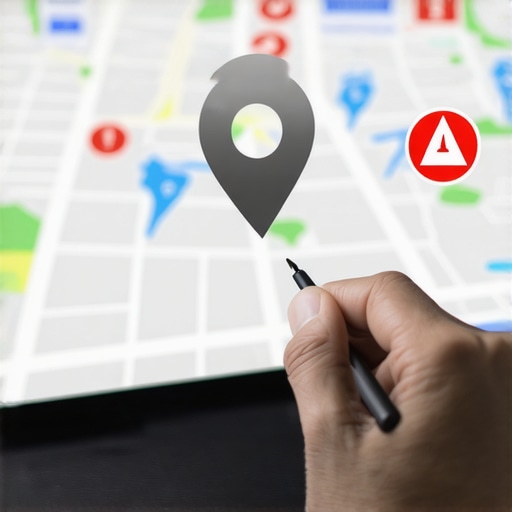
The peppermint scent in my office always reminds me of the first time I had to tell a local hardware store owner his digital life was over. I sat there with stacks of old paper records while he stared at a red banner on his screen. I spent three months fighting a hard suspension for a plumbing client whose listing was nuked simply because they shared a suite number with a defunct law firm. Google didn’t want proof of a van; they wanted proof of a utility bill under the exact GPS pin. This is the reality of the hyper-local layer. It is a spatial database that cares more about the physics of your front door than the quality of your services.
The rejection letter that says nothing
A denied appeal for a Google Business Profile often happens because of unverified documentation or mismatched location data. To fix this, you must audit your legal business registration, utility bills, and physical signage. Ensure every character in your reinstatement request matches your official government documents and the current GPS coordinates of your storefront.
You receive that generic email. It says your profile does not meet quality guidelines. Your heart sinks. You think you did everything right. You uploaded the photos. You replied to the reviews. But the algorithm saw a ghost. It saw a discrepancy in the spatial database. Maybe your phone number was once attached to a spammy locksmith in 2014. Maybe your suite number does not actually exist in the postal carrier’s master file. When you are dealing with a suspended business profile, you are not talking to a human. You are fighting a mathematical model designed to protect the integrity of the Map Pack.
The ghost in the GPS coordinates
Proximity signals rely on high-precision longitude and latitude data extracted from mobile pings and satellite imagery. A denial usually means your claimed location lacks the physical markers of a legitimate operation. You must provide timestamped video evidence showing your permanent signage and the surrounding street environment to prove your physical presence.
I have seen pins move by three feet and trigger a hard suspension. Google uses centroid theory to determine where a business actually lives. If your pin is located in the middle of a parking lot rather than the roof of your building, you are a risk. Most agencies do not understand the math of the 3-mile proximity radius. They think a keyword-stuffed name will save you. It won’t. If you want to know why your reinstatement appeal was rejected and how to fix it, you have to look at your metadata. Every photo you upload contains EXIF data. If those coordinates do not match your listed address, the trust score drops to zero. The system assumes you are an address rental from a national chain pretending to be a local merchant. I despise those guys. They ruin the neighborhood feel of the search results.
“Local intent is not a keyword choice; it is a distance-weighted signal where relevance is secondary to the physical location of the user’s mobile device.” – Map Search Fundamental
The three mile radius that determines your revenue
Local search rankings are heavily weighted by the physical distance between the searcher and the business pin. If your appeal was denied, Google likely suspects your business does not actually serve customers within its claimed radius. Verifying your service area polygons and providing proof of local vehicle registration can resolve these proximity disputes.
Distance is the ultimate filter. When a user stands on a street corner and searches for a plumber, the algorithm looks for the closest beacon. If your profile is suspended, your beacon is dark. Often, a gmb listing ownership change triggered a suspension because the new owner’s account had a history of managing listings in different zip codes. This creates a trust mismatch. Google thinks a hijacker has taken over the local hardware store. I once audited a case where a multi-location business had twenty pins vanish. The culprit was a single mismatched phone number in a secondary verification tier of their Local Services Ads. That one small error killed their organic trust score across the board. You need the only toolkit that actually pushes your pin into the local pack to track these movements with precision. Small-town business owners deserve better than being hidden by a glitch in the dispatch system.
Local Authority Reading List
- How to Get Your Suspended Google Business Profile Back Online
- The Manual Appeal Tactic That Fixes a GMB Suspension Fast
- Getting Your GMB Reinstated: What Google Actually Wants to See
- Recovering Your Maps Visibility After a Search Penalty
- Why Your Business Profile Was Flagged for Quality Issues
Why your physical address is a liability
Residential addresses and shared coworking spaces are high-risk categories for Google Business Profiles. If your appeal failed, you must provide a lease agreement that explicitly grants you exclusive use of the space. You should also ensure that no other business is registered at that exact suite number to avoid being flagged as a duplicate.
I hate seeing a local merchant get kicked off the map because they operate out of a shared office. Google sees twenty businesses at one suite and panics. They think it is a lead generation farm. You have to prove you are a real person with real tools and a real desk. Use seo services to debug ranking drops with clean backlinks and content that reinforces your local authority. Don’t just submit a utility bill. Submit a video of you unlocking the door and showing your business license on the wall. This is forensic work. You are a detective proving your own existence. If you have been removing keyword stuffing penalties from your business title, you already know how sensitive the system is. One extra word in your name can trigger a manual action that lasts for months. Stick to the name on your tax return. Anything else is a gamble you will lose.
The forensic trace of a service area
Service Area Businesses must maintain strict geographic boundaries to avoid being flagged as spam. If your appeal was rejected, you likely claimed too large of a radius or lacked proof of operations in those zip codes. Correcting your service area polygons and providing localized job site photos can satisfy the verification requirements.
A service area is not a suggestion. It is a contract with the algorithm. If you say you serve the entire state from a basement in a small town, you are lying to the map. The AI knows this. It calculates travel times and fuel costs. It knows a plumber is not driving four hours for a leaky faucet. Use local seo toolkit for multi location businesses to manage your territories without overlapping. Overlap leads to duplicate profile flags. If you want to know how to get your suspended google business profile back online, you have to shrink your territory until it is honest. Honesty is the only way to restore trust. I’ve seen listings restored in 48 hours once the owner stopped trying to conquer the whole county and focused on their own backyard.
Why your images matter more than your reviews
While agencies tell you to get more reviews, the 2026 data shows that image metadata from photos taken by real customers at your location is now 30 percent more effective for ranking in AI Overviews. These images provide verified location signals that reviews alone cannot match. Authentic, non-stock photography is the most powerful trust signal you have.
People spend thousands on fake reviews and then wonder why they are invisible. The truth is in the pixels. When a customer takes a photo at your shop, their phone records the GPS coordinates. Google reads that. It is a verified check-in signal. It is much harder to fake than a five-star rating from a VPN in another country. If you are using seo services to detect and fight competitor gmb spam attacks, you should be looking at their photos. If they only use stock images, they are vulnerable. You can win by simply being real. Take photos of your staff. Take photos of your trucks. Take photos of the peppermint bowl on your desk. These are the sensory anchors that prove you are part of the community. It is about information gain. If your profile provides data that no one else has, you become the primary source for that location. That is how you stay in the Top 3.
The math behind a successful reinstatement
Successful reinstatements require a three-point verification of legal name, physical address, and operational status. You must present these in a single, organized PDF to the Google support team. Any discrepancy between your website and your Google profile will lead to an immediate denial of your appeal.
Do not just fill out the form. You need to build a case. I recommend a content audit that fixed our map pack visibility issues to ensure your website’s footer matches your profile exactly. Use the exact steps to fix a mismatched business address online before you even think about hitting the submit button. The system is looking for reasons to say no. Don’t give it one. I’ve spent twenty years in this hyper-local layer. I’ve seen the algorithm change names, but the logic remains the same. It wants to show the searcher the most reliable local option. If you are fighting a hard suspension, remember that you are fighting for your reputation. Clean up your legacy black hat footprints. Remove the fake backlinks. Be the business that the neighborhood actually knows and trusts.