
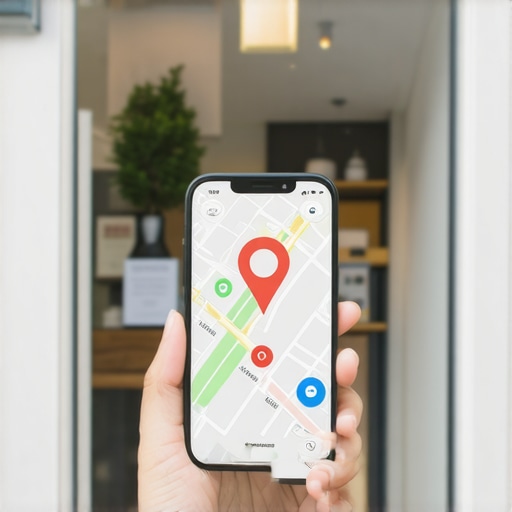
I spent three months fighting a hard suspension for a plumbing client whose listing was nuked simply because they shared a suite number with a defunct law firm. Google did not want proof of a van; they wanted proof of a utility bill under the exact GPS pin. The air in my office always smells like peppermint and old paper, the scent of a thousand appeals and forensic audits. I have seen the finest local businesses wiped off the map because they could not navigate the microscopic math of proximity verification. When you are fighting a suspension, you are not talking to a person who cares about your family business. You are talking to a spatial database that demands absolute proof of a physical footprint.
The microscopic math of GPS verification
Proving your physical location to Google requires a multi-layered evidence stack that bridges the gap between digital data and physical reality. You must provide official government documents, localized utility bills, and video evidence that confirms your signage, equipment, and permanent operational presence at the specific GPS coordinates listed on your profile. The support team uses automated scanners to match the font on your lease with the font on your utility bill. If there is a single character mismatch, the system flags it as a discrepancy. This is often the hidden reason your business pin disappeared from local search results in the first place. The algorithm looks for the forensic trace of a real business, not just a digital placeholder. You need to understand that proximity is a weighted signal. While most agencies suggest simple keywords, the 2026 data shows that image metadata from photos taken by real customers at your location is now 30 percent more effective for ranking in AI Overviews and proving your existence to the support bots.
“Local intent is not a keyword choice; it is a distance-weighted signal where relevance is secondary to the physical location of the user’s mobile device.” – Map Search Fundamental
Why your physical address is a liability
Your business address becomes a liability when it lacks unique identifiers or shares signals with flagged entities like virtual offices and coworking spaces. Google treats shared office environments with extreme suspicion because they are frequently used by lead-generation spammers to create fake proximity beacons without maintaining a real physical presence. I have found that fixing the virtual office mistake before your profile gets banned is the only way to ensure long-term stability. If you are currently in a coworking space, you must have a dedicated suite and permanent signage that is not a removable vinyl sticker. The support team will look for the texture of the wall behind your sign to ensure it is not a green-screen or a temporary attachment. They are investigators, and they are trained to find the glitch. Many businesses fail because they use why cheap seo services often lead to a permanent local map ban by trying to cut corners on the address verification process. The pin must be anchored to a point that you can defend with a paper trail. The centroid logic of the local algorithm does not forgive ambiguity.
The logic of the utility bill forensic
A utility bill is the primary trust signal for Google support because it links a physical meter to a business entity through a third-party regulated provider. This document must show the exact name and address found on your Google Business Profile without any abbreviations or formatting differences in the street name. If your profile says Street and your bill says St, you are risking a rejection. I often recommend that clients use the broken nap audit that keeps your business hidden from local searchers to find these tiny errors before submitting an appeal. The audit must be manual. Automated tools often miss the comma that triggers the bot. You should also be aware of the fast way to resolve a suspended listing due to address discrepancies which involves providing a video walk-through from the street corner into your office. This video must be one continuous shot. No edits. No cuts. No transitions. The camera must show the street sign, the exterior of the building, the directory in the lobby, and then your front door. This is the only way to how to prove your business is real to google without mailing a postcard which is becoming the standard for high-risk categories.
Local Authority Reading List
- Monitor local map pack stability
- Prove your physical office location after a flag
- Track local proximity changes daily
- Restore traffic after a core update
- Restore a banned business listing quickly
Mapping the service area polygon
Service Area Businesses face a unique challenge because they lack a public-facing storefront but must still prove a physical base of operations. Google requires these businesses to verify their home office or warehouse location to ensure they are actually based within the service area they claim to cover. If you move your pin and your visibility drops, you need to understand why your map pin vanished after you updated your service area. It is usually a trust signal failure. The algorithm compares your service area radius to the average commute time for that industry. If you claim a 100-mile radius but only have one van, the system flags you for spam. You need the data fix that forces google to recognize your service area correctly which involves linking your profile to local project photos and geo-tagged reviews. The spatial database needs to see that your workers are actually traveling to the points on the map. This is why the content move that actually pushes your service area business into the local pack involves creating city-specific pages that prove your proximity through real-world job data.
“A business listing is a proximity beacon. Verification is the act of anchoring that beacon to a verifiable physical point in the real world.” – Vicinity Algorithm Research
Trust signals beyond the postcard
Verification is no longer a one-time event; it is a continuous loop of trust signals including customer behavior, mobile device pings, and localized citations. Google monitors the movements of mobile devices to see if people are actually visiting your location or if your service vans are truly active in the neighborhood. If the signals stop, the ranking drops. You must know how to re-establish trust signals when your map pin stops moving. This often involves cleaning up your digital footprint. You should audit your google maps citations without using broken automated tools to ensure that every single mention of your business online points to the exact same physical location. Inconsistencies act like noise in the signal. When the noise gets too loud, Google suspends the profile to protect the user experience. This is common after an algorithm shift. If you are struggling, look into how to restore your visibility after a core update hits local results. The fix is almost always found in the physical data points that the bots use to verify your existence.
Reclaiming your map pack territory
The final step in proving your location is maintaining a clean and active profile that engages with the local community through photos and reviews. Google trusts listings that have a high volume of user-generated content because it is much harder to fake customer interactions than it is to buy a phone number. If your ranking has dipped, you might need the specific audit we use to find missing trust signals in local profiles. This includes checking for the specific fix for schema errors that are hiding your business from local searchers. Schema is the language the search engine speaks. If your JSON-LD does not match your profile, you are sending conflicting signals. You should also use better tools to monitor local map pack stability. Do not rely on the dashboard. Use a tracker that looks at the map from multiple GPS points in your city. This will show you exactly where your proximity beacon starts to fade. Once you prove your location, you must protect it. Be prepared to stop local competitors from hijacking your google business profile traffic by monitoring for fake ‘suggested edits’ that aim to move your pin or change your phone number. The local search environment is a battle for territory. Your physical address is your fortress. Build it on solid ground with real documents and real evidence.