The Ultimate Local Backlink Strategy for Real Estate SEO: Dominate the Map Pack in 2026
For over nine years, I have consulted for some of the most competitive real estate brokerages in the country. If there is one thing I have learned, it is this: most real estate agents are fighting the wrong war. They spend thousands of dollars a month on Zillow leads and national PPC campaigns, all while their most valuable asset – their Google Business Profile – sits in the “invisible zone” of the search results.
In the high-stakes world of google business profile seo, appearing on the second page of the Map Pack is essentially the same as not existing at all. When a potential homebuyer or seller searches for “realtors near me” or “best real estate agent in [City],” they rarely look past the top three results. To break into that “Local Pack,” you need more than just a verified address and a handful of five-star reviews. You need what I call “Geo-Validation.”
Geo-Validation is the process of proving to Google’s algorithm that your business is not just physically located in a city, but is an integral part of that community’s digital fabric. While many SEOs will tell you to focus on high Domain Authority (DA) links from national publications, I’ve found that a link from a local neighborhood association or a youth soccer team often carries significantly more weight for local rankings. We have seen through extensive testing and community discussions – including recent insights shared on Reddit regarding the “Exact Match” business name advantage – that while name-spamming might give you a temporary lift, it is a fragile strategy. The only sustainable “moat” against your competitors is a robust portfolio of local backlinks. In this guide, I will show you exactly how to build that moat. If you are ready to stop being invisible, you might want to read The Backlink Secret for Google Business Profiles That Most Consultants Ignore.
Why Real Estate SEO is Different in 2026
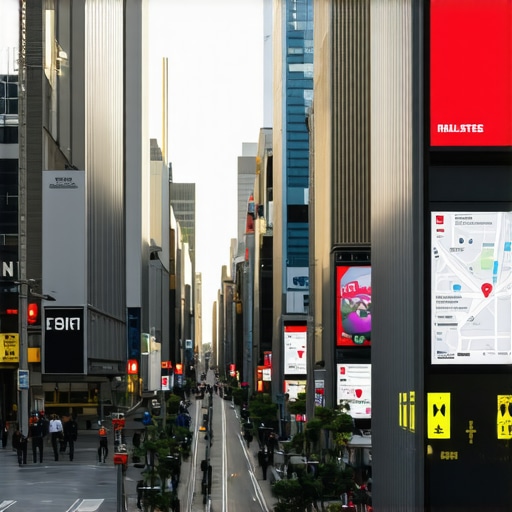
The landscape of google business profile seo has shifted dramatically as we move into 2026. We are no longer just optimizing for a list of blue links; we are optimizing for a world of AI-driven search and “Spatial Data.” Google’s search engine has evolved into a sophisticated discovery engine that utilizes AR overlays and 3D pins to verify business locations in real-time.
In 2026, local seo trends 2026 are defined by what we call “AI Trust Audits.” Google’s AI doesn’t just look at your citations; it cross-references your digital footprint against real-world spatial data. If your office is located in a co-working space but your backlinks all come from generic guest posts, the AI flags a “Spatial Data Gap.” This gap tells Google that you aren’t actually “on the ground” in the community you claim to serve.
Furthermore, the rise of “Haptic Map Search” means users are interacting with map interfaces in more tactile ways, often through wearable tech or holographic displays in smart vehicles. To stay relevant, your google maps seo 2026 strategy must prioritize proximity and verified local activity. It is no longer enough to have a static listing. You need a dynamic presence that Google perceives as a local authority hub. To prepare for these shifts, you should check out our guide on How to Fix Map SEO Planning for 2026 Holographic Pins to ensure your brokerage isn’t left behind by the next wave of hardware-integrated search.
The “Geo-Validation” Secret: What Most Agents Miss
When most agents think about local seo for real estate, they think about the Big Three: reviews, photos, and keywords. While these are essential, they are the “ante” to get into the game, not the winning hand. The winning hand is Geo-Validation through local backlinks.
There is a fundamental misunderstanding in the industry regarding link equity. Most SEO software will tell you that a backlink from a DA 90 site like Forbes is worth more than a DA 15 link from a local high school sports booster club. In the context of rank higher on google maps, this is often incorrect. Research from E2M Solutions and our own internal data at SEO Viper suggests that local backlinks act as “geo-signals.” These signals tell Google’s algorithm: “This business is genuinely embedded in this specific geographic coordinate.”
Think of it this way: Google is trying to solve the problem of “ghost offices” – agents who rent a virtual mailbox to rank in a city where they don’t actually live or work. A link from a national real estate blog doesn’t prove you are in that city. However, a link from the “Oak Creek Neighborhood Association” or the “Downtown Business Improvement District” is almost impossible to fake. These links validate your physical presence and community involvement. This is why many agents find that Why Your Neighborhood Landing Pages Fail to Drive Real Map Clicks is usually due to a lack of hyper-local link support, rather than poor copy.
5 High-Impact Local Backlink Sources for Real Estate
To truly improve google maps ranking, you need a diverse array of local signals. Here are the five most effective sources for real estate agents today. To manage these efforts effectively, I recommend using professional local seo tools to track your progress and identify new opportunities.
1. Hyperlocal Sponsorships
This is the “low-hanging fruit” of local SEO that most digital-first agents ignore. Sponsoring a Little League team, a local charity 5K, or a community theater production usually costs between $250 and $1,000. In return, you almost always get a link from their “Sponsors” page. These are high-value google business profile backlinks because the domain is geographically tied to your target area. Ensure the link uses your brand name or a variation of your primary keyword as the anchor text, but keep it natural.
2. Niche Property Platforms
General directories are dying, but niche property platforms are thriving. According to data from realestatebacklinks.net, links from platforms that are specifically built for property data and local real estate markets have a 4x higher correlation with Map Pack rankings than general business directories. These sites often have higher relevance in Google’s “Knowledge Graph,” making them essential for a google maps ranking service looking to deliver real results.
3. Local News & Digital PR
Every local newspaper has a “Community” or “Business” section. You don’t need a national PR firm to get featured here. Reach out to local journalists with data-driven stories: “How the New Tech Hub is Affecting Home Prices in [Neighborhood].” When they quote you and link back to your site, you gain a massive injection of local authority. This is a core component of local map pack seo because it signals to Google that you are a thought leader in your specific market.
4. Chamber of Commerce & Niche Citations
While the Chamber of Commerce is a standard citation, many agents fail to optimize it. Don’t just list your name; ensure your listing includes a link to a specific “City Landing Page” rather than just your homepage. Furthermore, look for “Niche Citations” – directories for specific professions or local business types. These help categorize your business correctly within the local ecosystem, making it easier for Google to rank google business profile listings for specific intent-based searches.
5. Community Partnerships
Co-marketing is an underutilized SEO tactic. Partner with a local mortgage broker, a home inspector, or even a popular local coffee shop. Write a “Local Guide” together and host it on both of your websites with cross-links. For example, “The First-Time Homebuyer’s Guide to [City]” co-authored by you and a local lender. This creates a network of local relevance that Google’s AI can easily map and reward. If you haven’t seen growth from these efforts yet, you might want to read The 2026 Guide to AI-Driven Local Search Visibility.
Technical Execution: Map Embeds & Schema
Building backlinks is only half the battle. You must ensure your website is technically optimized to “catch” the authority these links provide. This is where the intersection of on-page SEO and google business profile seo becomes critical.
First, every city landing page on your site should feature a Google Map embed. However, don’t just embed a generic map of your city. Embed your specific Google Business Profile. This creates a direct technical link between your website’s content and your Google listing. When Google crawls your page and sees the embed, it reinforces the “Geo-Validation” signal.
Second, you must utilize advanced Local Business Schema markup. This JSON-LD code tells search engines exactly what your business is, where it is, and what areas it serves. In 2026, we are also seeing the importance of “ServiceArea” and “Geoshape” properties within schema to define the exact boundaries of your real estate expertise. If your technical setup is lacking, you will find that Why Your City Landing Pages Fail to Boost Local Map Rankings is often a result of missing or malformed schema data. I highly recommend using a google business profile audit tool to check for these technical gaps regularly.
Furthermore, don’t forget to audit your existing citations. Inconsistent NAP (Name, Address, Phone) data is the silent killer of Map Pack rankings. If your address is listed as “Street” on one site and “St.” on another, it creates friction in Google’s verification process. Learn How to Audit Your Local Citations for Maximum Impact to ensure your foundation is solid before you start building high-level backlinks.
Avoiding the “Ranking Cliff”
In my years of consulting, I have seen far too many real estate agents fall off what I call the “Ranking Cliff.” This happens when an agent gets impatient and buys a $99 “SEO Package” from a low-quality provider. These packages usually involve thousands of “map citations” and “social signals” generated by bots.
Google’s algorithm is incredibly adept at spotting these patterns. In 2026, the penalty for these tactics is no longer just a drop in rankings – it is often a total profile suspension or “ghosting,” where your listing remains active but is programmatically excluded from all search results. This is a “Ranking Death Sentence” for a real estate business.
The reality is that quality google business profile seo requires manual outreach, genuine community involvement, and technical precision. There are no shortcuts. If a service sounds too good to be true, it is. I’ve written extensively on this in Stop Buying $99 SEO: Why Cheap Local Services Are a Ranking Death Sentence. Invest in sustainable, white-hat strategies that build long-term equity in your brand.
Conclusion: The Path to the Top 3
Dominating the Google Map Pack in 2026 is about more than just keywords; it’s about becoming a verified authority in your local market. By focusing on Geo-Validation through hyperlocal sponsorships, niche property platforms, and strategic community partnerships, you can build a backlink profile that your competitors cannot replicate.
Combine these local signals with a rock-solid technical foundation – including proper schema markup and optimized map embeds – and you will see your visibility skyrocket. Don’t let your listing stay invisible. Audit your current profile today and consider a professional rank google business profile service to help you scale your lead generation and dominate your local market for years to come. The future of real estate is local, digital, and hyper-connected. Make sure you’re at the center of it.